

Education does not begin and end within the walls of a classroom. While schools provide structured learning guided by curricula, a significant portion of a child’s intellectual, emotional and social development takes place at home, often in ways that teachers may not fully observe or assess. These home-based learning experiences shape how children think, solve problems, communicate and interact with the world.
Understanding how children learn outside formal school settings is essential for parents who want to support academic success more effectively. It also highlights why some children demonstrate skills, attitudes or knowledge that may not be immediately visible in traditional classroom environments. This article explores the less visible but highly impactful ways children learn at home, offering insight into how these experiences complement formal education and contribute to holistic development.
One of the most powerful ways children learn at home is through observation. Unlike structured classroom teaching, this type of learning is informal but deeply influential. Children constantly watch how adults behave, communicate and respond to challenges. From these observations, they develop behavioural patterns, language skills and problem-solving approaches.
For instance, when children observe parents managing finances, resolving conflicts or organising daily routines, they internalise practical life skills. These lessons are rarely taught explicitly in school but play a crucial role in shaping independence and decision-making abilities.
Language development is also significantly influenced by home interactions. Conversations during meals, storytelling and casual discussions expose children to vocabulary, sentence structures and communication styles that differ from formal classroom instruction. Children who engage in frequent dialogue at home often develop stronger verbal expression and comprehension skills. Additionally, children learn emotional regulation by observing how adults handle stress, disappointment or success. This form of social-emotional learning is subtle but critical, as it influences behaviour in school settings even if teachers are not aware of its origin.
At home, children often have more freedom to explore topics that interest them. This self-directed learning is fundamentally different from classroom instruction, which follows a structured syllabus and timeline. When children pursue their interests independently, they develop curiosity, initiative and deeper engagement with learning materials.
For example, a child interested in technology may experiment with devices, watch educational videos or attempt simple coding tasks. Another child might explore art, music or storytelling without formal instruction. These activities foster creativity and critical thinking, skills that may not always be fully captured through standard classroom assessments.
Problem-solving also emerges naturally in home environments. Whether assembling a toy, navigating a game or figuring out how to fix something, children learn to think independently and persist through challenges. This process builds resilience and adaptability, which are essential for academic success. Importantly, self-directed learning encourages intrinsic motivation. Unlike classroom tasks that may be driven by grades or external rewards, home-based exploration is often fuelled by genuine interest. Children who develop this internal drive are more likely to become lifelong learners.
However, this type of learning can go unnoticed by teachers because it does not always translate immediately into measurable academic performance. A child may possess strong analytical or creative skills developed at home but may not demonstrate them fully in structured classroom tasks.
Household responsibilities provide another important avenue for learning that is often underestimated. Tasks such as cleaning, cooking, organising and caring for younger siblings teach children discipline, time management and accountability.
These responsibilities also introduce practical applications of academic concepts. For example, cooking involves measurements, timing and sequencing, reinforcing mathematical and organisational skills. Managing chores requires planning and prioritisation, which are essential executive functioning skills.
Children who participate in household tasks often develop a stronger sense of responsibility and independence. They learn to complete tasks without constant supervision, a skill that directly supports academic work such as homework and project completion.
In addition, real-life problem-solving is a key component of learning at home. Situations such as resolving minor conflicts with siblings or figuring out how to complete a task efficiently help children develop negotiation and critical thinking skills. These competencies may not always be visible in the classroom, where tasks are more structured and guided. However, they significantly influence how children approach learning, interact with peers and respond to challenges in school.
Read also:
10 subtle academic patterns parents see at home that teachers may overlook
How to Help Struggling Students in the Classroom
The home environment increasingly includes access to digital tools and resources that extend learning beyond textbooks. Educational videos, interactive apps and online platforms expose children to a wide range of subjects in engaging formats.
Unlike classroom learning, which may be limited by time and curriculum constraints, digital learning allows children to revisit concepts, explore new topics and learn at their own pace. This flexibility supports personalised learning, enabling children to strengthen areas of weakness or deepen their understanding of subjects they enjoy.
Informal digital learning also enhances technological literacy, which is becoming an essential skill in modern education. Children who engage with technology at home often develop familiarity with digital tools that can give them an advantage in school-based tasks.
However, the learning that occurs in these environments is not always visible to teachers. A child may acquire knowledge or skills through online exploration that are not immediately reflected in classroom assessments but contribute to overall competence and confidence.
Home is the primary setting where children learn cultural norms, values and ethical principles. These aspects of learning are fundamental to character development and influence behaviour in educational settings.
Through family traditions, religious practices and daily interactions, children develop a sense of identity and belonging. They learn respect, empathy, honesty and responsibility. Moral reasoning is also developed through discussions and real-life experiences at home. When parents explain the consequences of actions or encourage children to consider different perspectives, they help build critical thinking and ethical judgement.
These forms of learning are rarely assessed in academic settings but play a significant role in shaping a child’s overall development. Teachers may observe behaviours such as cooperation or discipline without fully understanding the home-based learning experiences that contribute to them.
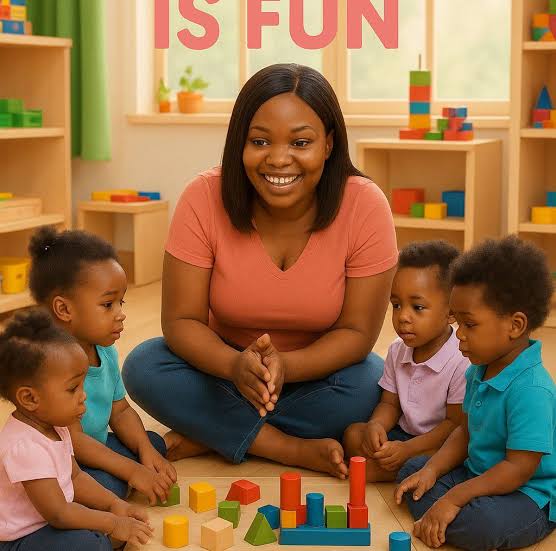
Play is a powerful learning tool that is often more prominent at home than in school. Through play, children experiment, imagine and create, developing cognitive and social skills in the process.
Creative activities such as drawing, building, role-playing and storytelling encourage innovation and flexible thinking. These experiences allow children to explore ideas without the pressure of formal evaluation, fostering confidence and originality.
Play also supports social development. When children engage in group play with siblings or peers, they learn negotiation, teamwork and conflict resolution. These skills are essential for classroom interaction but are often developed outside formal educational settings.
Furthermore, unstructured play encourages exploration and risk-taking, which are important for problem-solving and adaptability. Children learn to test ideas, make mistakes and try again. an approach that supports academic learning even if it is not directly visible in classroom performance.
Children’s learning experiences extend far beyond what is taught in school. The home environment provides a rich and diverse range of learning opportunities that shape intellectual, emotional and social development in ways that teachers may not fully observe.
From observation and self-directed exploration to real-life responsibilities and creative play, these experiences contribute to skills and attitudes that influence academic success. While classroom education remains essential, it is only one part of a broader learning ecosystem.
For parents, recognising and intentionally supporting these forms of learning can significantly enhance a child’s development. For educators, understanding that students bring diverse home-based learning experiences into the classroom can inform more inclusive and effective teaching approaches. Ultimately, bridging the gap between home and school learning is key to supporting well-rounded, capable and confident learners.