
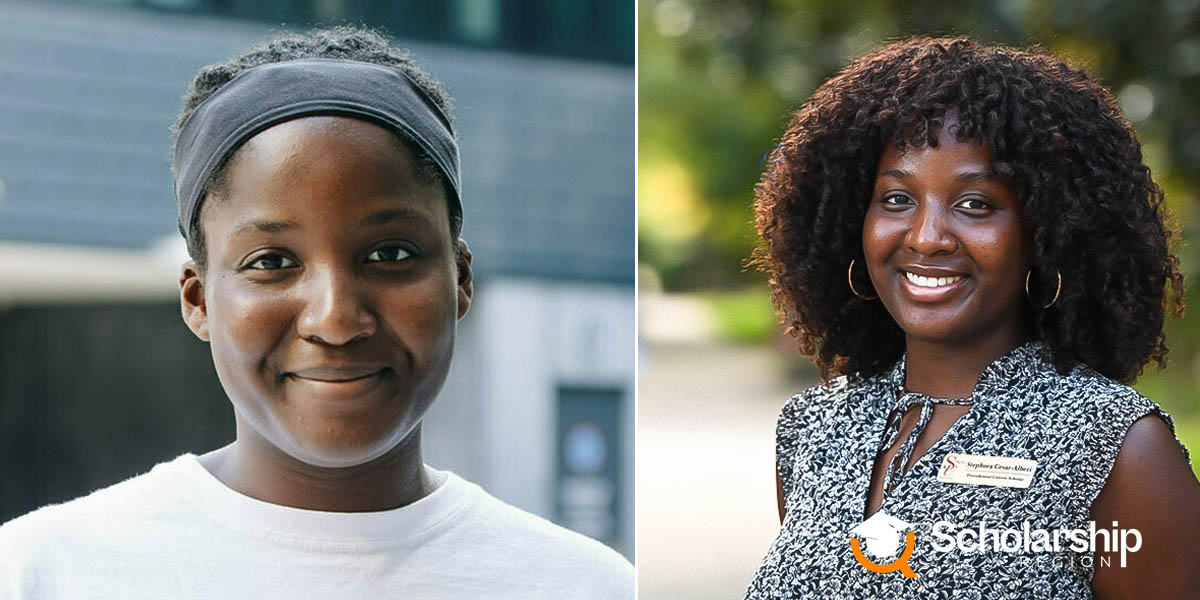

Growing up, Stephora often helped with technology-related problems at home, which sparked her interest in computers. After finishing high school, she enrolled at Salisbury University in 2021 to pursue a Bachelor’s degree in Computer Science.
Initially, she explored cybersecurity, but soon realized it was not the right path for her. Her interests shifted when she participated in a National Science Foundation Research Experiences for Undergraduates program, where she was introduced to deep learning and image processing.
There, she learned how algorithms can analyze and enhance images for applications such as facial recognition, object detection, and image compression.
Fascinated by the possibilities, Stephora worked closely with one of her professors to develop a facial emotion recognition model, deepening her interest in artificial intelligence and computer vision.
Stephora later pursued a study-abroad opportunity at the University of Tartu, where she completed a summer program focused on vision systems in space technology.
During the program, she learned how computer vision techniques were being applied to Estonia’s first lunar rover project, gaining experience in optics, machine learning, and deep learning.
This experience convinced her that computer vision could have powerful applications far beyond traditional computing.
She also secured a Boren Scholarship, which supports students studying fields critical to U.S. national security and requires recipients to work for the federal government after completing their studies.
Stephora’s research achievements and vision eventually earned her the Gates Cambridge Scholarship, one of the world’s most competitive international scholarships.
The award provides full funding for postgraduate study at Cambridge, including full tuition fees, an annual living allowance of about £21,000, travel fare, health insurance, and additional research and academic allowances.
At Cambridge, Stephora plans to combine computer vision and biotechnology to advance scientific discovery.
Her research interest focuses on using computer vision with microscopes to accelerate disease diagnostics and drug discovery, particularly for infectious diseases.
She stated that her motivation comes from personal experience. Several members of her family in Haiti were affected by the cholera outbreak in 2010 and are now facing ongoing health challenges such as malaria.
Stephora believes that AI-driven imaging technologies could help scientists detect diseases faster and improve treatment development, especially in vulnerable countries.
“Biotechnology departments are increasingly looking for computer scientists to apply computer vision in molecular microbiology and microscopy,” she explained.
Stephora hopes her work will help improve healthcare outcomes in developing countries, particularly across the Global South.