


The engineering field can’t find people to hire.
The 2025 Talent Trends report by Michael Page reveals that more than half (55%) of global engineering and manufacturing hiring managers have faced hiring challenges over the past year.
Meanwhile, in Japan, the Ministry of Economy expects a decrease of over 700,000 engineers by 2030.
That means slim pickings for STEM industries. What it doesn’t mean is it will be easy for you to land just any job you want.
Yes, many engineers do not struggle with a shortage of job offers. Yes, it’s one of the highest-paying fields. Mechanical engineers earned an average salary of US$123,000 in 2026, electrical engineers earned US$111,091, and biomedical engineers earned US$145,373.
Still, engineers are hired on a skill-first basis. This means it’s crucial that you get an education in one of the best countries to study engineering for the best shot at your future.
Even then, though, there are some other things you’ll want to take note of.
The ups and downs of studying engineering
In comparison to other skill-first jobs, many engineers are underpaid when considering the expertise they offer.
A computer engineering graduate from Vanderbilt University who is now the CEO of his own tech company says: “I myself have been the sole engineer on a project that generated US$56 million in revenue. I was paid…not much. So when I asked for a raise, I was denied so many times until I left the company.”
Then, there are cases where engineers struggle to secure jobs post-graduation.
A McMaster University mechanical engineering graduate even went viral for his frustration on the job market. Despite his 400 job applications and a couple of interviews, he still had no job offer.
“An engineer from a Canadian university, respectable university, no job,” he says in his video. “Do I have co-op experience? Yes. Did I have a job coming out of university? Yes. What is it? What am I missing?”
While we don’t have the complete answer, one thing we can say is this: companies are struggling to hire engineers because today’s candidates just don’t have the skills they want.
A survey conducted by the Institution of Engineering and Technology in 2021 echoes the same — one in five employers surveyed had experienced recruitment difficulties because applicants lacked the necessary soft skills.
Of those, teamwork was the most commonly cited missing skill, closely followed by time management, prioritisation, and leadership. In fact, only one in 20 employers thought that new applicants had all the soft skills they’d need to succeed.
Such issues can be remedied through a comprehensive education in engineering — and no, it’s not just by sitting through lectures and memorising numbers to get the top grades in class.
 Engineering isn’t a single-person job; you’ll often end up working in teams, and this is when having the right soft skills will come in handy. Successfully building substantial soft and technical skills requires an onslaught of industry experience, like internships and co-ops. Those opportunities, which often lead to full-time jobs and industry connections beneficial to career growth, put fresh graduates on the higher edge of skill.
Take places like Concordia University or Santa Clara University, for example.
At Concordia, experiential learning is at the heart of all its engineering programmes, allowing students multiple opportunities to solve real-world problems while sharpening their soft skills. Meanwhile, Santa Clara’s engineering programmes allow students to work with international research, immersion experiences, and community outreach projects that provide real-world knowledge and build empathy.
The world needs engineers, and people need to feel inspired in their learning experience to move forward. Otherwise, bridges won’t be built, pollution will persist through carbon-based energy, and technology will never improve.
Therefore, we’ve taken the liberty to find the best countries to study engineering for you below — other than the US, UK, and Australia, as those three are facing engineering tribulations of their own.

Engineering has traditionally been a male-dominated field.
The reality of studying engineering abroad
Many seek the American — or British, or Australian — dream through studying abroad. The reality of the engineering landscape, however, is much different than what you’ve probably envisioned for yourself.
They may long have been some of the best countries to study engineering, but things are changing.
For one, it’s expensive to study and survive in one of these big three countries. In Australia, engineering undergraduate courses cost 30,000 to 50,000 Australian dollars (US$21,363 to US$35,606) per year.
If you’re spending that hefty sum to get an engineering education, then you’d expect the payoff to be worth it — to be granted top-tier technical skills, instant employability, and career growth.
But that’s not always the case.
The topic of engineering talent in the US has become hot and controversial. Elon Musk tweeted in December last year, “There is a permanent shortage of excellent engineering talent. It is the fundamental limiting factor in Silicon Valley.”
While he’s not exactly wrong, he isn’t quite right, either.
The shortage of local engineering talent in the US stems from an educational system that ceases to build the technical skills needed to succeed.
DataRepublican on Substack writes that computer science programmes “shifted from an engineering-driven focus to one that prioritises business applications. Such a change does little to equip graduates for engineering excellence in the US.”
As a result, 23.1% of STEM workers in the nation are non-citizens, but that doesn’t mean companies are investing in foreign workers for the right reasons, either. In the H-1B programme, a working visa for non-US citizens, the hiring of international workers is a double-edged sword.
On the one hand, top companies like Amazon hire international employees with salaries that reflect the current market rate — as it should. On the other, there are tech companies that aren’t hiring internationals for their talent but for the sheer purpose of paying those employees less.
Therein comes another disparity in the engineering field: by gender. It’s no secret by now that stepping into the engineering field as a woman means diving head-first into what the New Straits Times calls a “man’s world.”
In other words, it’s a heavily gendered industry.
Through research conducted by the Harvard Business Review, it was discovered that many women in engineering were encouraged by their mentors to pursue more managerial roles that exercised soft skills, such as communication, teamwork, and relationship building, instead of roles that require technical expertise.
While there’s nothing inherently wrong with that, if that’s what they’d like to pursue, softer skills in engineering are severely undervalued — not to mention that many women thrive in the technicalities.
One wrote: “I recently had a one-year stint in the managerial path. It was something my management and our portfolio managers really pushed for because they felt I had skills – I am articulate, good with people, have excellent presentation skills – that would really allow me to succeed. I hated it, switched back to a technical path, and disappointed most of my champions. Now I’m thankful that I know myself better not to do it again.”
Interestingly, countries outside the US, UK, and Australia witness higher numbers of women pursuing careers in STEM fields.
In countries like Oman, Malaysia, and Mongolia, more than 50% of their engineers are women.
In the UK, only 16.9% of engineers are women, and the country is facing a spike in women leaving the engineering field. In Australia, the percentage is 16%, while in the US, it’s 15%.
10 best countries to study engineering that aren’t the UK, US, or Canada
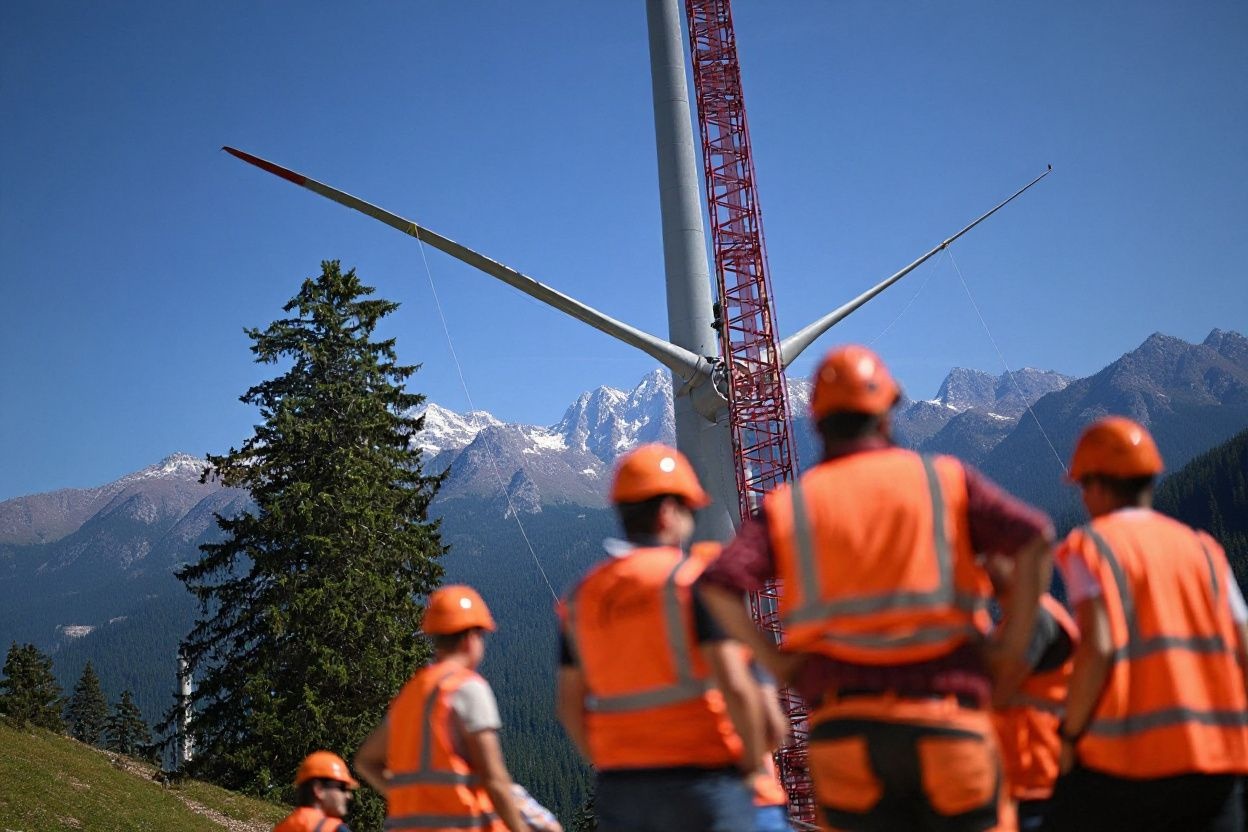
Switzerland’s practically nature’s haven, but they’re adept at engineering innovation too.
Switzerland
Switzerland is so much more than a pretty face on the surface. It’s one of the best countries to study engineering because it’s also one of the most innovative, taking first place in the Global Innovation Index ranking 15 years in a row.
For example, the Swiss clinical-stage life sciences company CUTISS developed an automated machine that produces skin tissue grafts to treat adults and children with severe skin injuries, making it the world’s first.
They’re also home to the first quantum smartphone built with a “foolproof encryption system,” and the space junk clean-up mission.
The Federal Institute of Technology Zurich, better known as ETH Zurich, is one of the most prestigious universities to study engineering, not just in Switzerland — but in the world. Other top institutions are Ecole Polytechnique Federale de Lausanne, ranked #51 by the US News & World Report in the Best Universities for Engineering list, and the University of Zurich.
Sweden
Studying in Sweden is about discovering your own lagom — that sweet spot where studying, social life, and personal time all work together. The country is famous for its work-life balance, and that mindset carries over to student life too.
Instead of constant pressure, you’ll find an environment where you can focus on your studies while still enjoying the little things.
And when it comes to education, Sweden has plenty to offer. In fact, six universities appear in the QS World University Rankings by Subject 2025: KTH Royal Institute of Technology (#112), Chalmers University of Technology (#143), Lund University (#257), Linköping University (#193), Uppsala University (#271), and Luleå University of Technology (#501–#550).
These universities are hubs of knowledge, creativity, and innovation — making Sweden not just a great place to live, but an inspiring place to learn.
Germany
The green scenery of Germany comes with much to see. Forests like the “Helm’s Deep” resemble a Lord of the Rings scene stealer, 12th-century medieval small towns like Lübeck are now a UNESCO World Heritage Site, and the art-centric capital of Berlin is sprawling with buskers and murals, and plenty more.
As pretty as Germany is, it is also smart.
Innovative projects like wind turbine expansion and electric vehicle infrastructures contribute to the country’s goal of climate neutrality by 2045, with an increased usage of renewable energy sources. They’re no stranger to the automotive scene either, with brands like Mercedes-Benz, Porsche, Audi, and more in their docket.
Centred on such a prosperous industry, Germany is on the front line as one of the best countries to study engineering. In fact, during the 2024 to 2025 academic year, Germany recorded about 402,000 international students, of which 43% enrolled in an engineering programme.
Here, the Technical University of Munich, Karlsruhe Institute of Technology, and RWTH Aachen University lead with cutting-edge research and world-class professors to equip you with technical expertise in an intercultural setting.

Japan is home to some of the most recognisable tech organisations in the world.
Japan
Mitsubishi Motors, Panasonic, Hitachi, and Canon are leaders in the technology sphere and are headquartered in one of the best countries to study engineering, Japan.
According to the World Intellectual Property Organisation (WIPO), Japan is the #12 most technologically advanced country in the world.
In the Land of the Rising Sun, Sony changed how we listened to music on the go with the Walkman, which let people listen to cassette tapes on the go. Meanwhile, Honda has built humanoid robots that can interact with humans and assist those with mobility issues.
On top of all that, the country is spearheading eco-innovation to expand its renewable energy sources and eliminate greenhouse gas emissions.
With that said, studying engineering in Japan means getting first-hand insight into a country that stays ahead of cutting-edge development. The University of Tokyo is at the top of the ranks when it comes to engineering programmes, alongside the Tokyo Institute of Technology, Tohoku University, and Kyoto University.
New Zealand
New Zealand has birthed some of the most beautiful landscapes known to mankind, like the surfer-clad Piha Beach in West Auckland or the mystique forests and turquoise waters of Hokitika Gorge.
The country isn’t just one of nature’s finest though. In the Global Innovation Index 2025, New Zealand ranks 26th amongst world economies.
The University of Canterbury was New Zealand’s first engineering school, and it remains one of the best, offering fields like civil engineering, mechatronics, forest engineering, and plenty more. The University of Auckland is another reputable institution for engineering education, alongside the Auckland University of Technology.

As the largest country in the world, it’s integral that Russia continues to produce high-skilled engineers to keep them up and running.
Russia
Russia’s engineering schools began in the 18th century when the emperor sought trained workmen to revitalise the Russian army and navy. Since then, the engineering industry has continued to serve as the backbone of the country’s development in history.
As one of the oil and gas industry leaders, Russia is a renowned location for mining specialists to kick off their careers. Plus, they’re internationally renowned for various engineering fields, like mechatronics and robotics, civil engineering, and biomedical engineering.
Their in-demand programmes have made them as one of the best countries to study engineering. The Lomonosov Moscow State University is one of Russia’s best go-to institutions for engineering, and it’s ranked #79 for Engineering & Technology.
Other universities include the Bauman Moscow State Technical University and the South Ural State University.
Austria
Imagine starting your day with a bike ride through a peaceful town before heading to small classes where your ideas matter. That’s part of everyday student life in Austria.
Beyond its scenic charm, Austria is also recognised for its strong engineering and technology education. Leading institutions include Vienna University of Technology (TU Wien), ranked #197 in the QS World University Rankings 2026 and known for mechanical, civil, electrical, and software engineering.
Other notable universities are Graz University of Technology (TU Graz), which focuses on sustainable systems and technical disciplines, and Johannes Kepler University Linz (JKU), known for AI, data science, and mechatronics.

Qatar is investing heavily in building a sustainable, knowledge-driven economy under Qatar National Vision 2030. As a result, there’s a growing demand for engineering skills, especially in industries like oil, gas, and technology.
Qatar
For many students, engineering in Qatar isn’t just about studying — it’s about opportunity.
The country’s Qatar National Vision 2030 aims to diversify the economy beyond oil and gas, with major investments in infrastructure, technology, and innovation.
As these projects grow, so does the demand for skilled engineers in industries such as construction, energy, and transportation.
Plus, multinational companies like Qatar Petroleum and Bechtel are already operating in Qatar, offering graduates valuable international exposure and career prospects.
If you’re considering studying engineering in Qatar, top institutions include Qatar University (QU), Texas A&M University at Qatar (TAMUQ), and Hamad Bin Khalifa University (HBKU).
Poland
Poland’s engineering sector is growing quickly. With major EU-funded infrastructure projects, expanding renewable energy developments, and a strong position in manufacturing and R&D, the country has become one of Europe’s rising engineering hubs.
But with all this growth comes a challenge — there simply aren’t enough experienced engineers to keep up with demand.
For students interested in engineering, this creates exciting opportunities. A great place to begin building those skills is at some of Poland’s top engineering universities, including Warsaw University of Technology, Wroclaw University of Science and Technology (Wrocław Tech), Gdańsk University of Technology, and AGH University of Krakow.
Czech Republic
The Czech Republic is known for being a highly industrialised country. From traditional heavy industries to cutting-edge high-tech sectors, industry plays a big role in everyday life here. For students, this creates a unique advantage: universities are closely connected with the industries around them.
One of the best examples of this connection is the Czech Technical University in Prague (CTU). Over the centuries, CTU has built its reputation through groundbreaking science and engineering, supported by outstanding educators and researchers.
Today, CTU continues to strengthen its position through close partnerships with global industry leaders, including Toyota, Skanska, Bosch, Siemens, Honeywell, GE, Rockwell, ABB, McKinsey, DaimlerChrysler, and Škoda-Volkswagen.
Because of these connections, many CTU graduates go on to work as engineers or managers within these organisations.
Others pursue entrepreneurial ambitions by founding their own companies. Startups such as NetBeans and Telematix, both established by CTU alumni, have grown into internationally recognised businesses.
And for those who pursue research, the opportunities are equally impressive. Many CTU alumni continue their careers as researchers and professors at top universities worldwide or at world-class research facilities such as CERN (the European Organisation for Nuclear Research).
Disclaimer: This article was updated on March 12, 2026.